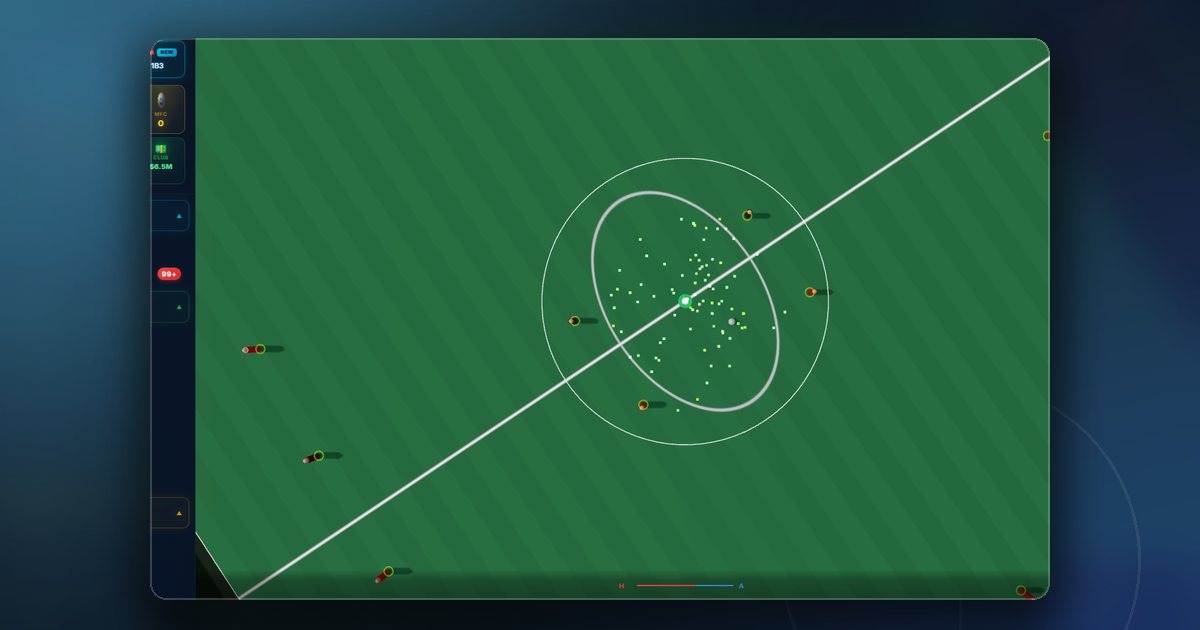
Every fixture in ManageFC is played by the same match engine, whether you watch it live or take the instant result. This post explains, in plain terms, what that engine does with your team — and which of your decisions it actually reads.
The same match, live or instant
The engine is deterministic and seeded: each match gets its own random seed, and the same inputs with the same seed always produce the same match. That is why a live match where you change nothing ends exactly as the instant result would have. Live play does not give you better luck — it gives you the chance to react.
Who plays
The engine picks each side's eleven automatically: a goalkeeper first, then the highest-ability players available. Squad depth and fitness are therefore what decide who plays. The surest way to influence your line-up is to keep the squad deep and rested — an injured or exhausted star simply is not picked.
How strong is each team today?
Before a ball is kicked, the engine works out a force for each side. It starts from the average effective ability of the eleven players and then multiplies it by everything that shapes the day:
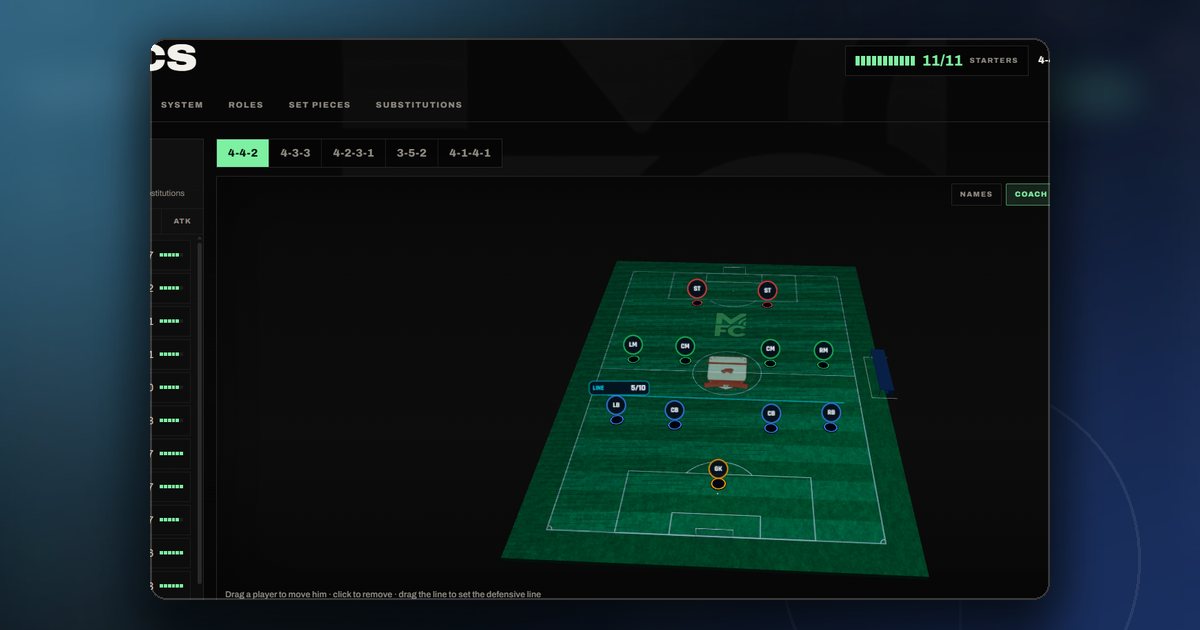
- formation against the opponent's formation;
- playing style against the opponent's style;
- home advantage;
- morale and recent momentum;
- fatigue;
- the four tactical dials — line, pressing, tempo and width;
- and mentality — defensive, balanced or attacking.
"Effective" ability is the key word. Each player's attributes are multiplied by his condition — at 70% condition he plays at 88% of his ability — and by morale, worth 1.2% per point away from neutral. A strong squad that is tired and unhappy can be weaker on the day than a modest squad that is fresh and confident.
Ninety minutes in eighteen pieces
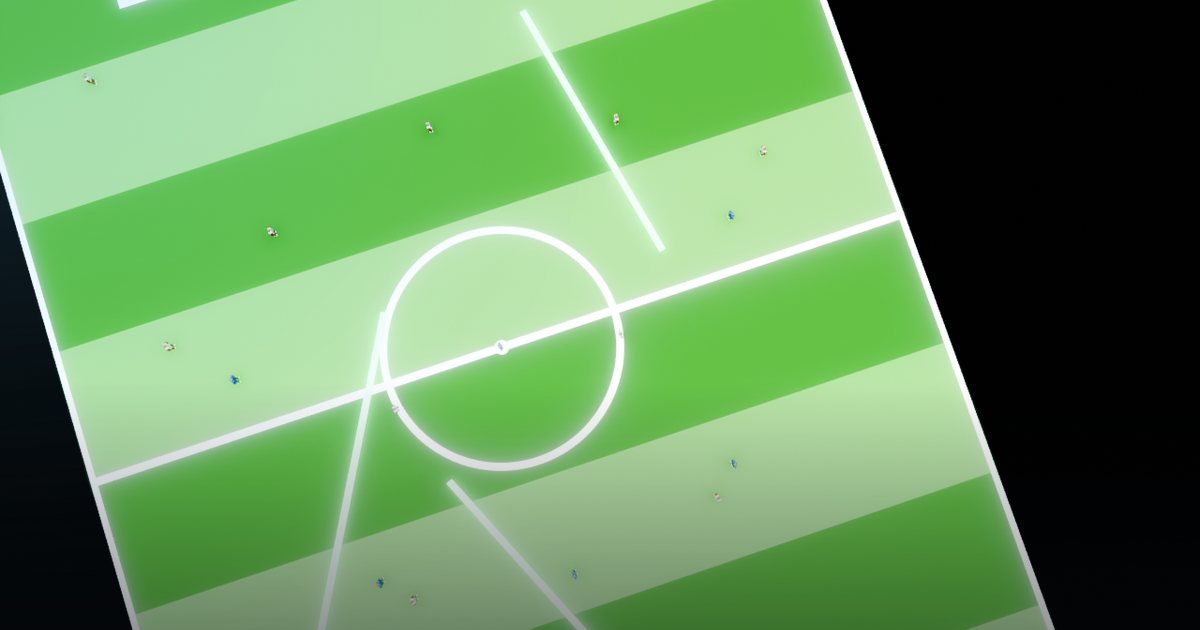
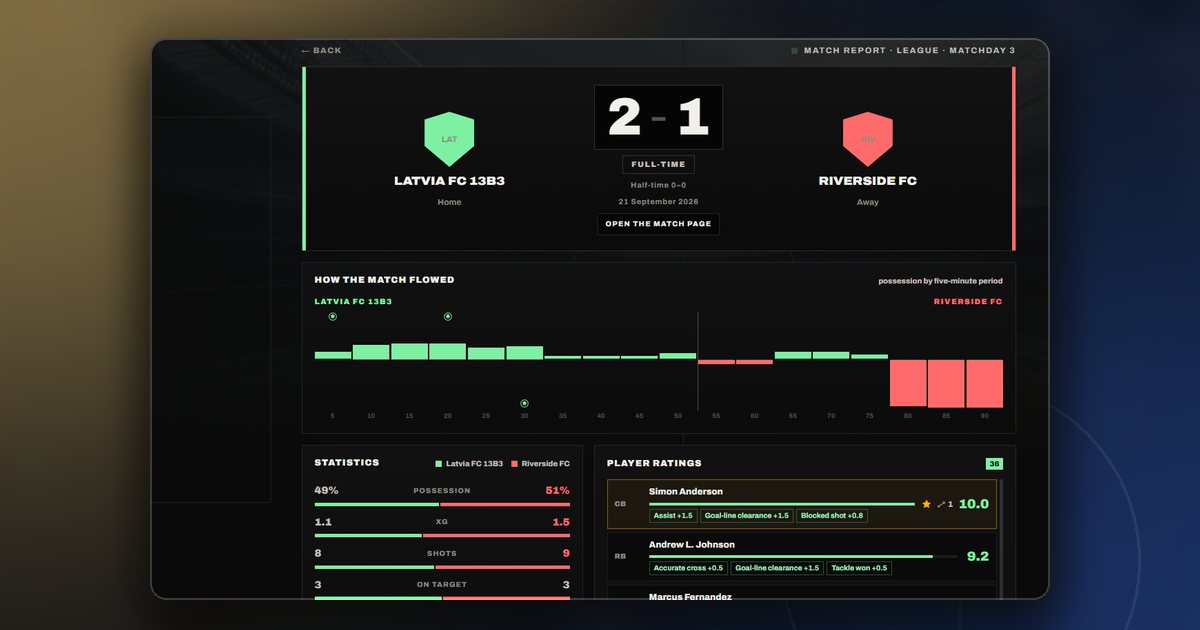
A match is played as eighteen segments of five minutes. In each one, the balance of force decides possession and how often each side creates chances; each chance is then resolved by the players involved — the shooter's finishing, the goalkeeper's reflexes, the quality of the opportunity.
Fatigue builds as the match goes on: from nothing in the first segment to a 25% penalty in the last, with half-time recovering part of it. It hits physical attributes hardest, technical ones less and mental ones least — tired legs lose duels before they lose their reading of the game. Injuries are rolled once per player per match, and players in poor condition are more likely to pick one up.
Your substitution plan is followed in the second half, at most one planned change per team in each segment, and set pieces are taken by the takers you named.
Ratings after the whistle
Every player starts from 6.0 and moves with his ability relative to the match average — roughly 0.7 of a point for every 20 points of ability above or below it. His consistency then adds some swing, and the events of the match do the rest:
- playing under 75 minutes costs a little, under 30 a little more;
- defenders and goalkeepers are rewarded for a clean sheet;
- midfielders gain when the team dominates possession and lose when it does not;
- winners gain, losers drop.
The final rating sits on a 1–10 scale and feeds the player's form. Over a season, ratings are the best quick guide to who is actually earning his place.
What this means for you
- Rotation is a tactic. Condition multiplies everything, so a rested good player beats a tired great one.
- Pick the captain carefully. A captain on the pitch is worth 1.5% for the whole side — small, free, and lost if he is injured or dropped.
- Read the opponent. Formation and style are judged against the other team, not in isolation.
For the details behind each multiplier, the match day guide and the mentality article go deeper.
Comments
No comments yet — start the conversation.