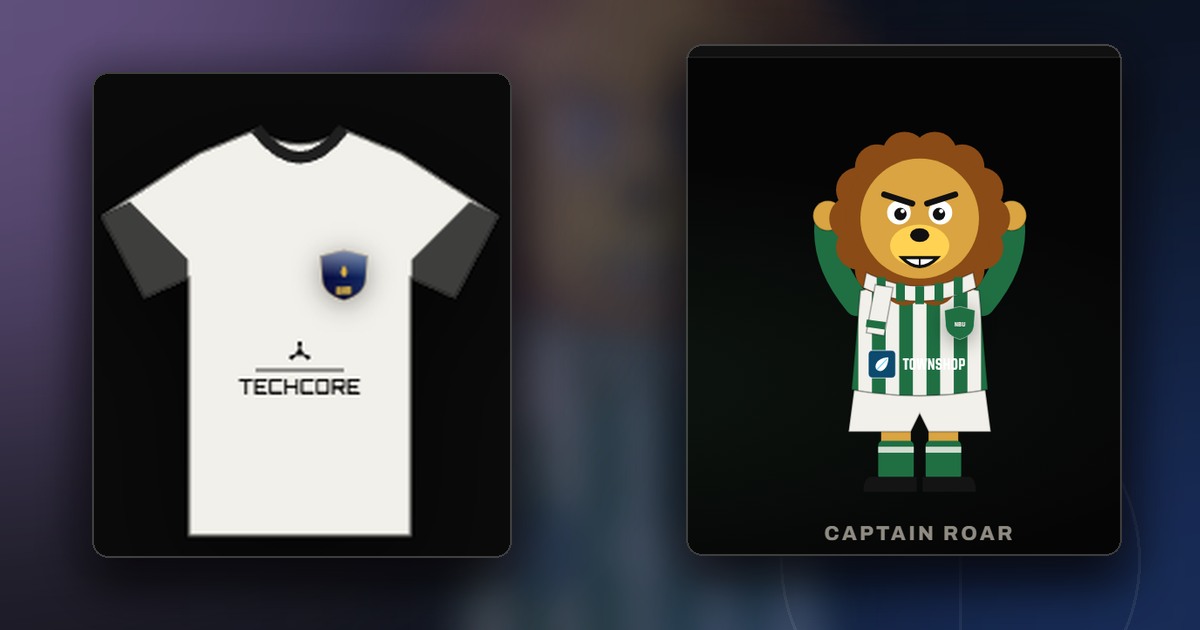
A sponsor deal used to change a number in the accounts and little else. That never felt right. A sponsor is part of how a club looks: on the shirt, around the ground, in the photographs people keep. This month we drew the sponsors properly.
A mark, not a name
The first version was text on a shirt, and it looked like text on a shirt. So we built a small design system instead: eighteen sponsor identities, each with its own mark, and seven ways of building that mark — a wordmark with a line, a seal, a panel, a ribbon, a tile, a name split between two hands, a name on a curve.
New clubs do not need an artist. A club's sponsor is given a mark from the same system, drawn from its name, so every deal in the game has something that looks designed rather than typed.
On the shirt
Your main sponsor goes on the chest; your secondary sponsor goes on the back. The shirt on the sponsors page now shows both, in the club's colours, with the contrast checked so a dark mark on a dark shirt never happens. The same shirt is worn by the club mascot: the full home kit, with the colours, the pattern, the shorts, the socks, the crest and the sponsor on the chest.
Around the pitch
The 3D stadium now carries a ribbon of sponsor panels along both touchlines, once the ground has proper stands on both sides. The panels alternate the club's own marks, and they are only there when the club has deals — an empty ribbon stays plain rather than inventing a brand. In the match screen the ribbon sits where the advertising boards would be in a real ground.
Why the small sizes took the longest
A mark that works at the size of a shirt is not the same mark that works on a panel forty metres away or on a phone at thirteen pixels. We tested the same logos at every size the game uses, on light shirts and dark panels, and changed the construction when a name became a smudge. The rule was simple: if you cannot read it, it is not a sponsor yet.
A club's identity is the crest, the colours, the ground and the stories. The names that pay for the journey belong there too.
Comments
No comments yet — start the conversation.