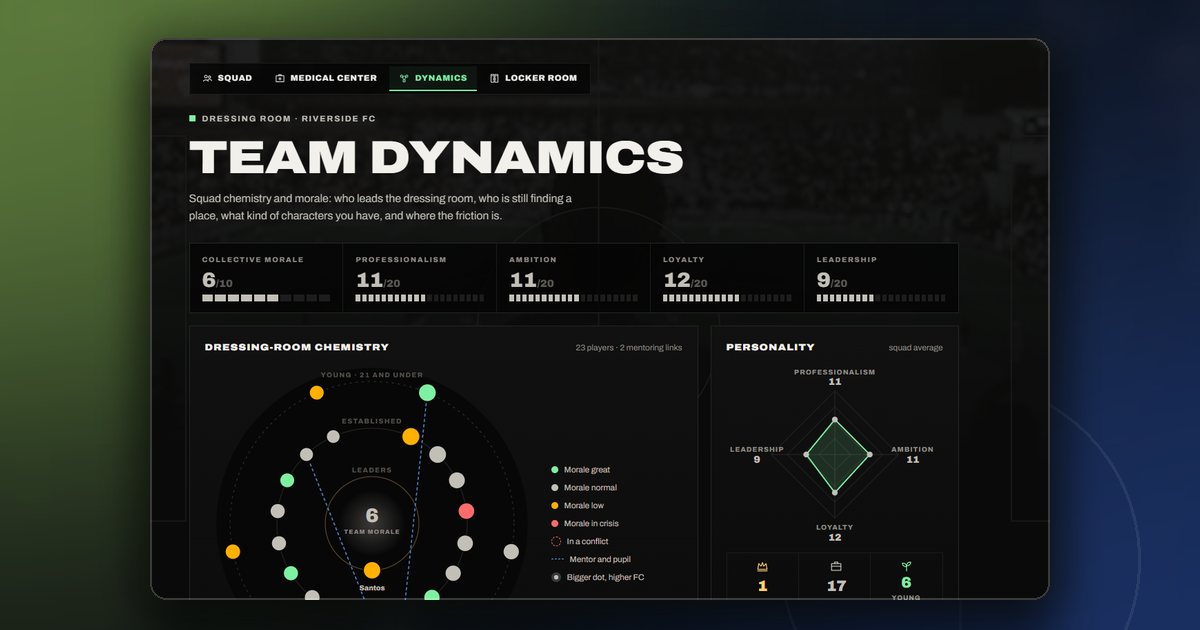
There are two crowds at your club, and managers constantly confuse them. One is attendance — actual bums on seats, which your ticket prices and your fanbase size decide. The other is fan satisfaction — how the supporters feel about the club, which moves on what the team does. In real life the two are related. In our numbers, they're almost completely separate systems — and that's a choice we made deliberately, for reasons below.
Satisfaction: the match-to-match ledger
Fan satisfaction moves on what happens, with results doing most of the work:
- A win: +5. A convincing win: +10. Beating a genuinely stronger side: +15 — the biggest single swing in the system.
- A home draw: −1. Barely a shrug, but not nothing.
- Defeat: −4, and worse for bad ones — −7, down to −10 for a heavy defeat. Losing big hurts the mood more than losing quietly.
- Signing a player rated 75 or above: +3. Supporters read intent in signings, and a statement arrival is a statement.
- Selling an important player: −4. The mirror image, and worth weighing against the fee.
- Stadium and facility upgrades: +2 each. Concrete plans make people feel the club is going somewhere.
You won't find "ticket prices" anywhere on that list, and that's deliberate. Pricing your season greedily doesn't disappoint the fans; pricing it generously doesn't delight them. A manager who keeps prices artificially low to "protect the mood" is paying real money every week for a stat that doesn't exist.
Attendance: the crowd that actually reacts to prices
Empty seats are a different mechanism — the pricing system's business, with the mechanics in match revenue. Three things worth knowing here:
- Your fanbase grows or shrinks slowly with how you price and how you perform — it's the long-term memory of the relationship. Every week it also drifts a few percent toward the crowd an ordinary club of your division draws, higher with good form and a good reputation. Promotion raises that target at once; relegation lowers it.
- Your ground decides how many of them can come in. A crowd can never be bigger than the stadium holds, and the first two stadium levels hold nobody at all, so there is no gate and no ticket price to argue about until level 3.
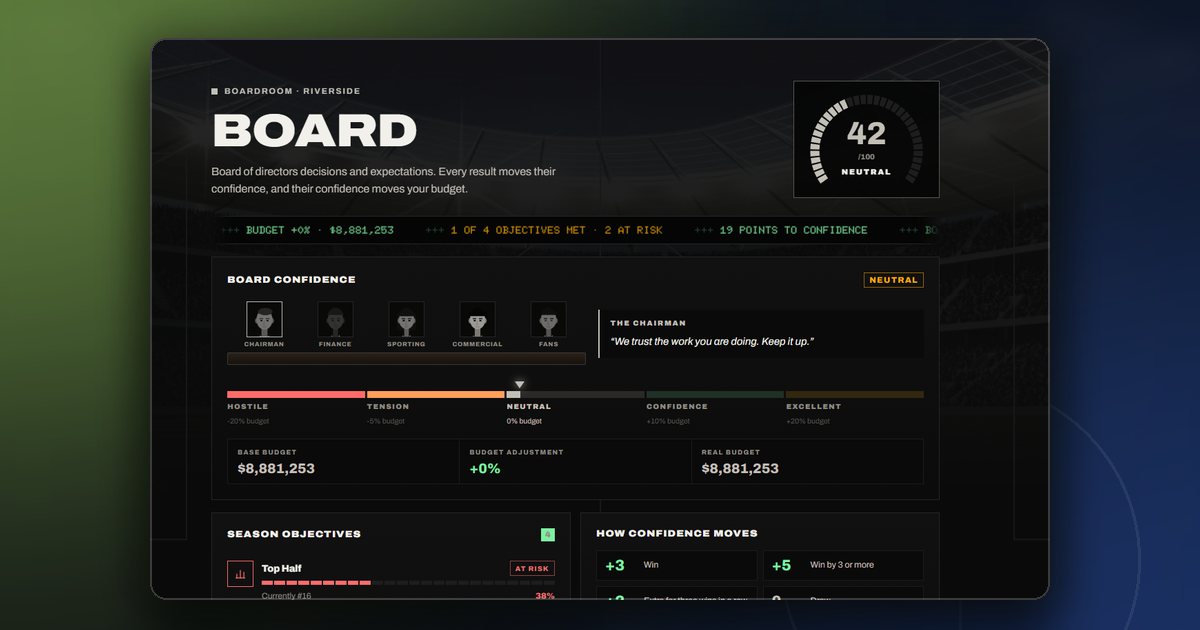
- If your fan base falls under 15% of capacity and you haven't touched the price in three weeks, the board, of all people, writes to ask you to manage the stadium. The fans won't complain about cheap tickets. The accountants will.
Why the separation is deliberate
It would be easy to make fans boo high prices — some games do exactly that: punishment dials layered on punishment dials. We went the cleaner way: money decisions cost money, football decisions cost mood. You can run an expensive club the fans still love, or a frugal one they loathe. The two ledgers never lie to each other on the way to the balance sheet.
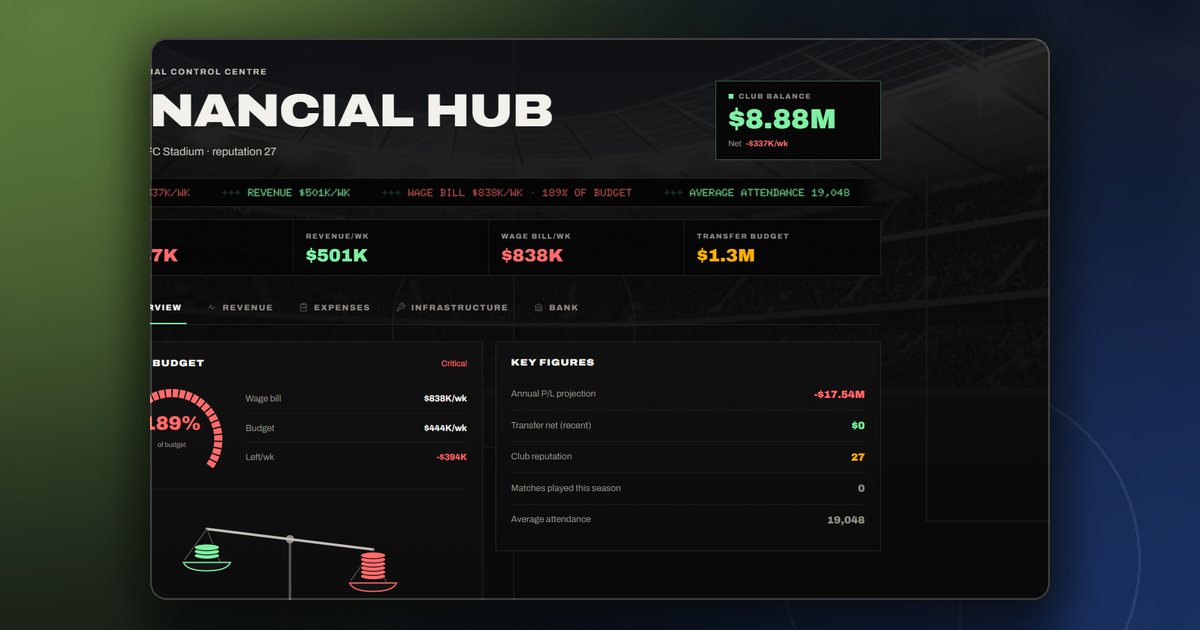
The full fan model — satisfaction swings, the fanbase growth bands, the 85% cap — is in the wiki's stadium and pricing article. If the mood inside the dressing room is the separate problem, that system is Morale, explained, and the finance guide shows what a full house actually pays.
Comments
No comments yet — start the conversation.