Last week a player sent us a short, friendly email with four ideas. None of them was a big feature on its own, but each one was something you run into every day when you manage a club. We liked all four, so we built all four.
Your filters stay where you left them
Searching the market for a left-back under 23, opening a profile, going back, and finding the search wiped clean was a small annoyance that added up. The squad, transfer and scouting pages now remember their filters and tabs while you move around the game, so going back takes you back to exactly where you were.
Player names you can click
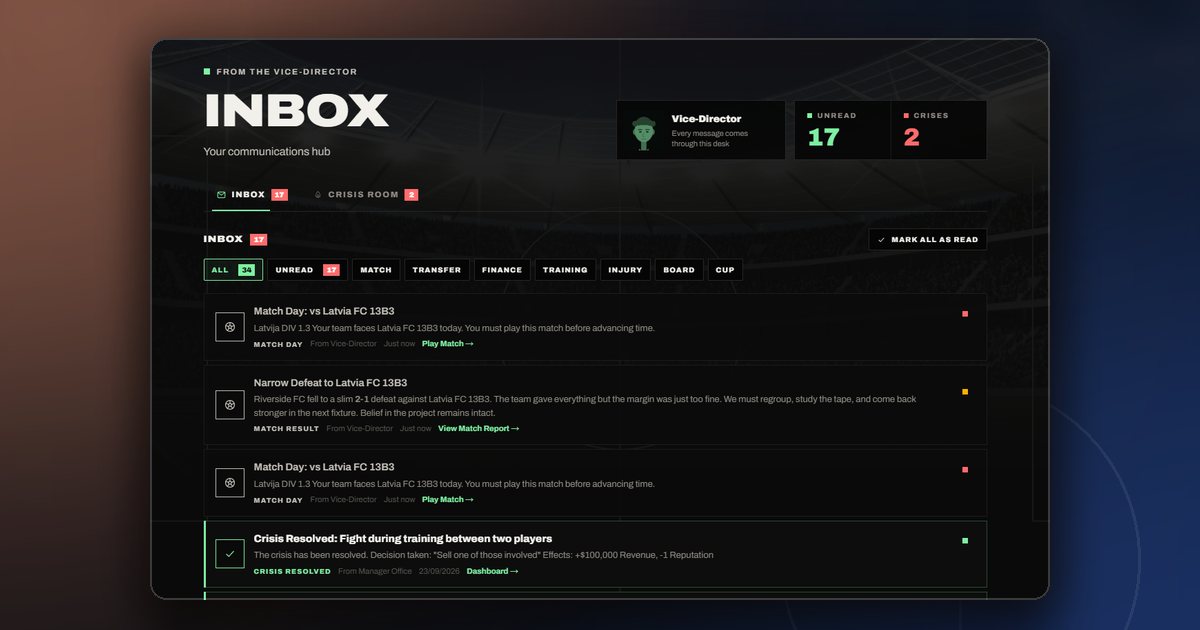
Messages and transfer news mention players all the time, and until now a name was just text. Player names in your inbox messages and in the transfer feed now open the player's profile, whether he plays for you or for a rival you are keeping an eye on.
A transfer in two steps
Buying a player used to settle the fee and his contract in one go. Real transfers do not work that way: first the clubs agree a fee, then the buying club sits down with the player. That is how it works now. Once the selling club accepts your bid, you offer the player a weekly wage and a contract of one to five years. He tells you what he wants, and his demand depends on what a player of his level earns in your division, on his current wage and on how ambitious he is. At an amateur club nobody is paid, so there is no wage to haggle over, and a player whose level is paid football will not join one. Your board has the last word: it will not approve a wage above a quarter of what the club earns in a week, or one that takes the whole wage bill past that weekly income. You have three tries to agree. If talks break down, the deal is off and you pay nothing.
A style that belongs to the club
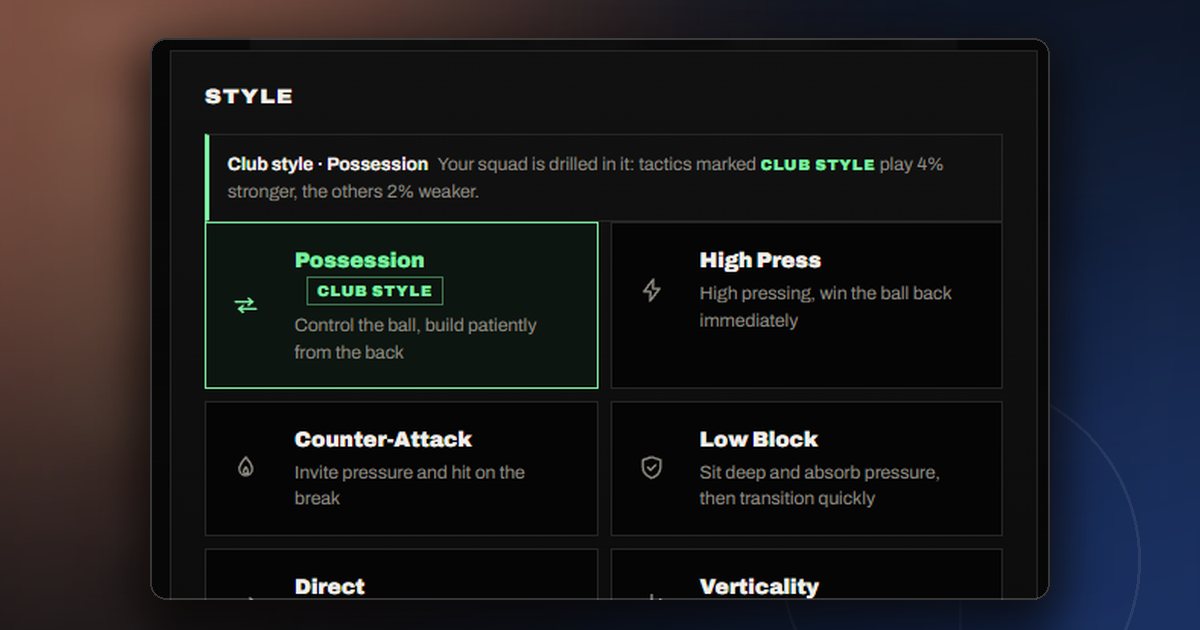
When you create your club you choose how it plays: possession, pressing, counter-attack, attacking, defensive or balanced, and you can change it later in Club Settings. That choice now means something on the pitch. Your squad is drilled in the club's style, so a match tactic that fits it plays a little stronger and one that goes against it plays a little weaker. A balanced club has no fixed identity, so every tactic is neutral for it. The tactics screen marks the styles that fit.
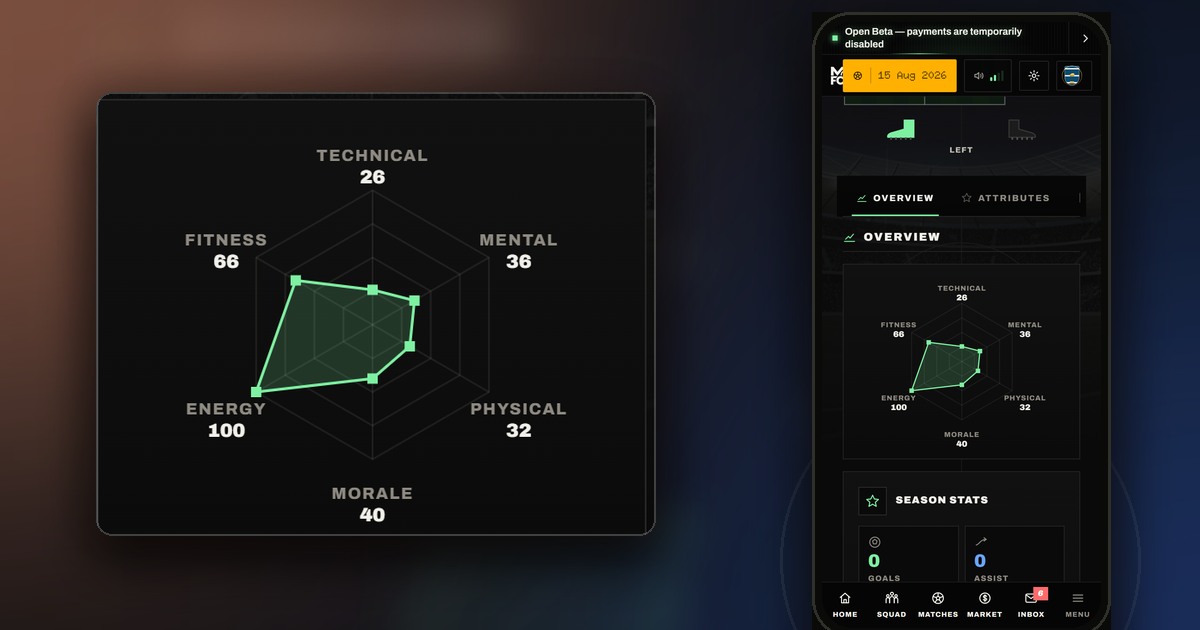
The style also reaches the academy. Your youth teams are coached the same way, so a youngster promoted to the first team arrives with the attributes your style needs a little higher: passing and vision for a possession club, stamina and work rate for a pressing one, pace and finishing for a counter-attacking side.
Keep writing to us
ManageFC is still in open beta and still changing quickly, and suggestions like these shape it more than anything else. If something in the game gets in your way, tell us. Small things matter.
Comments
No comments yet — start the conversation.