Every club in ManageFC carries a reputation score, and for a long time it was one of those numbers you could watch forever without knowing what it actually feeds. We built it to scale three things — and the third one surprises people. It's not how good your team is: reputation is how big the club is seen to be. And seen-by-whom turns out to matter in three expensive places.
What reputation scales
Three things ride directly on the score:
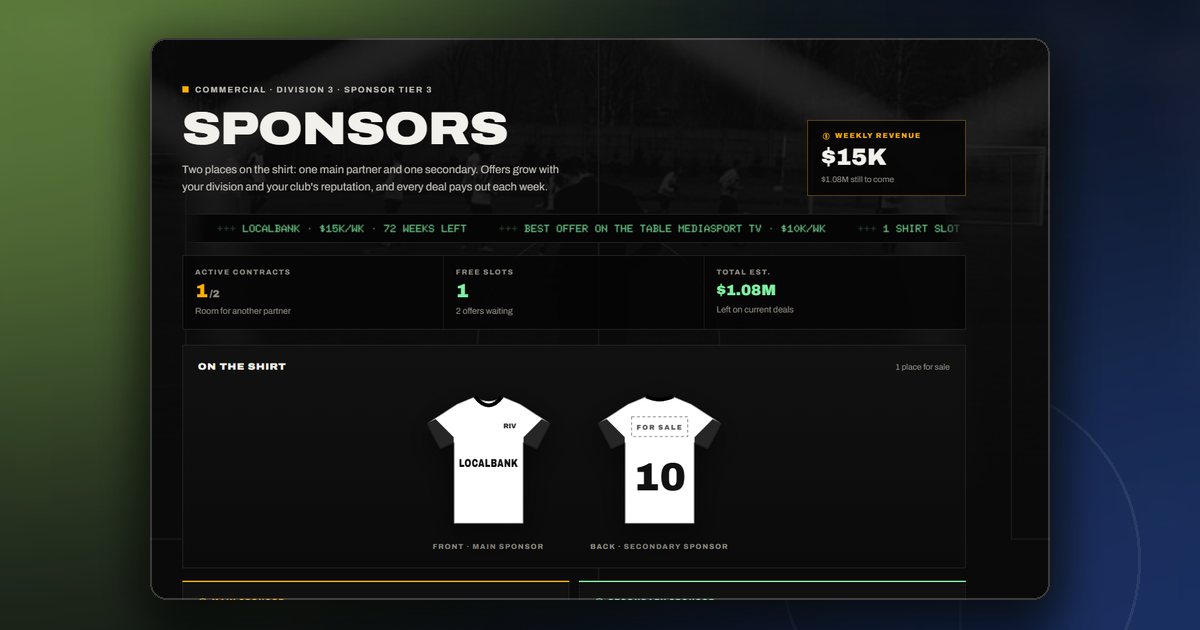
- Every sponsorship deal you sign. The offers you receive are scaled from 0.6× at the bottom of the reputation range to 1.4× at the top — a range of more than double between two clubs on identical sponsor slots.
- Your commercial income on the weekly pulse — the stream that fills the gaps between matchdays runs through the same reputation multiplier.
- Your crowd. Reputation moves the size of crowd your supporters grow toward, from about 15% below an ordinary crowd for your division at the bottom of the scale to about 15% above at the top. A famous name fills seats even in a lean season; nobody comes to watch a nobody.
The doors it opens
Reputation is also the keycard to offers you simply don't receive when you're small. Once your public reputation as a manager reaches 80, sponsor negotiations open brands that are a division above your level; at the very top of the scale, 100, two divisions above. The practical effect: a high-reputation club in division 3 signs money deals a mid-table division 2 club can only dream about. The sponsorship screen's offers change accordingly, so growth shows up there before it shows up in your balance.
There's a price for optimism in the other direction: cancelling an active sponsor costs 5 reputation. Walking away from a signed deal is a public statement, and the number remembers it.
Where reputation comes from
Reputation moves slowly, and mostly on results — the same currency the board watches. Two habits speed it up:
- Results beyond your level. Beating bigger names is the fastest legitimate lever the match engine offers.
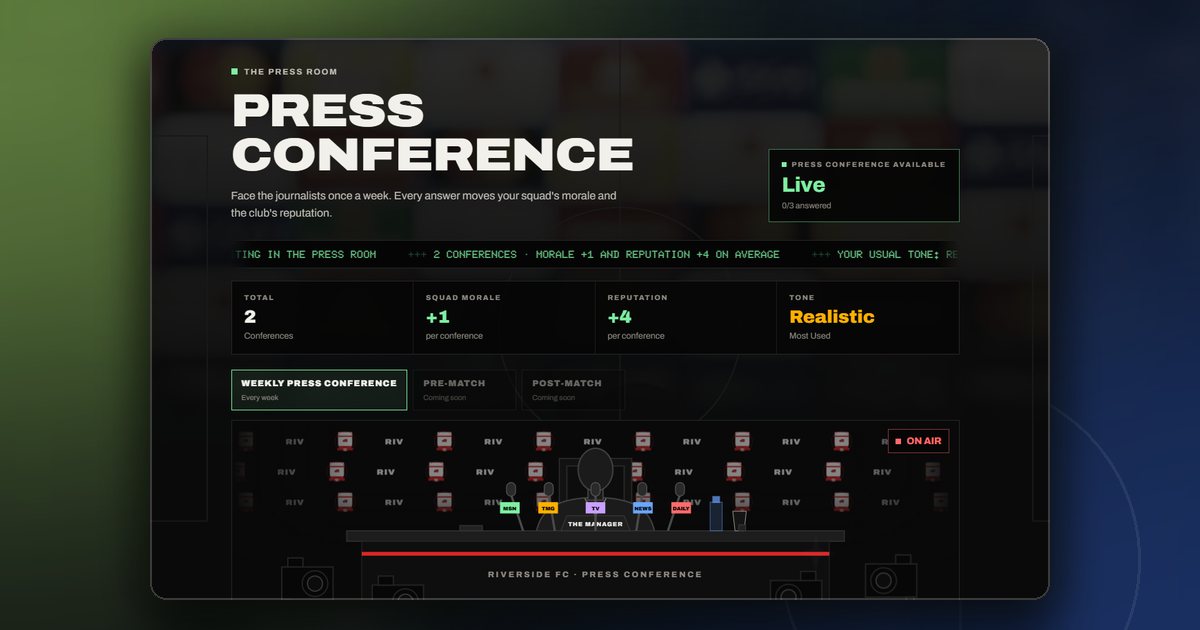
- Saying sensible things. The realistic tone at the press conference builds reputation a point at a time — see How to answer the press without making it worse for when to use it and when it costs you more than it pays.
What reputation does not do
It doesn't make your players better, and it doesn't make the market cheaper. In the transfer market, though, it does tilt the table: bigger clubs negotiate from a stronger position, and players lean toward the move a reputation represents. A famous badge signing the same player on the same terms as an unknown one will simply lose fewer of those races.
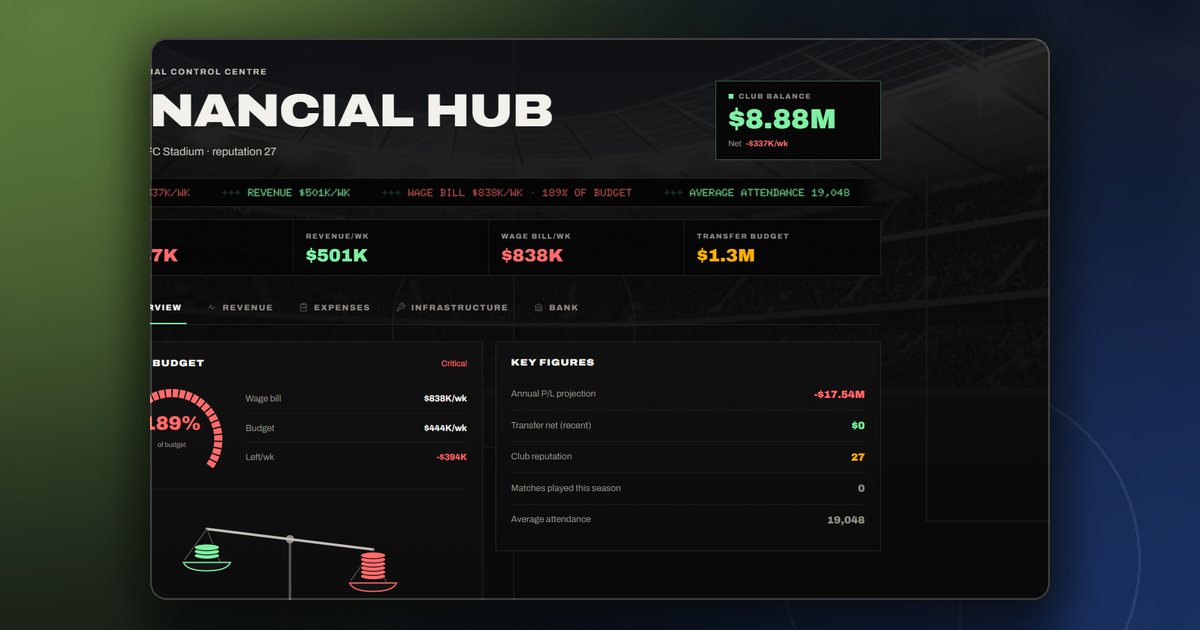
The numbers behind the sponsor scaling live in the wiki's sponsors article, the crowd side pairs with Match revenue, and if the transfer angle is what brought you here, the guide's finance page shows where all the streams land each week.
Comments
No comments yet — start the conversation.